Congress is ablaze with outrage as explosive new evidence from Mark Meadows reveals former President Donald Trump’s direct orchestration of schemes to overturn the 2020 election, even as all paths to criminal accountability collapse. A historic Georgia racketeering case against Trump and key allies has just been dropped, marking a catastrophic failure of justice.
On November 26th, 2025, Georgia’s special prosecutor formally abandoned the high-profile RICO case targeting Trump and 18 co-defendants. The charges stemmed from a sprawling conspiracy implicating Trump’s inner circle in efforts to subvert the electoral process. Yet after years of investigation, trial is now deemed impossible while Trump remains in office until 2029.
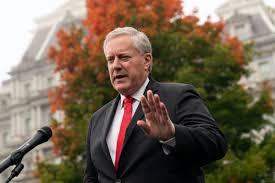
This stunning legal retreat comes amid revelations from the so-called “Meadows files”—an unprecedented trove of contemporaneous emails, texts, and Oval Office notes that detail Trump’s personal orders to press state officials, organize fake electors, and disrupt the January 6 certification. Meadows, Trump’s chief of staff during the 2020 aftermath, was at the center of these schemes.
Even more incendiary, Trump issued federal pardons in early November to key conspirators including Meadows and Rudy Giuliani, preemptively shielding them from prosecution at the federal level. This combination of dropped charges and presidential pardons amounts to near-total immunity for those who allegedly orchestrated one of the most audacious attacks on American democracy.
The prosecutor cited “legal barriers, delays, and evidentiary issues” as reasons for dismissal, highlighting the near-impossibility of securing a trial before Trump’s current term ends. Yet this reasoning masks a deeper systemic dysfunction: a sitting president cannot be prosecuted under existing Department of Justice guidelines, and state prosecutions struggle against political and procedural obstacles.
The collapse of the Georgia case is not just a legal defeat—it obliterates any criminal accountability for figures behind a multi-state pressure campaign to overturn lawful election results. Giuliani, Meadows, the fake electors, and dozens more evade justice, despite overwhelming evidence documented in painstaking detail by investigators and congressional committees.
The Meadows files are a damning exposé. They reveal Trump’s direct approval and management of illegal tactics, even after being warned by lawyers and officials that his claims of fraud were baseless. These documents demonstrate not a misguided leader but a calculated campaign of deception designed to retain power at any cost.
Perhaps the most chilling aspect is the operational role Trump played in plotting January 6, 2021. The evidence indicates he intended to incite a hostile crowd to disrupt the certification of Joe Biden’s victory—an unprecedented attempt to sabotage a constitutional process from the highest office in the land.
Despite the January 6 committee’s exhaustive investigations, public hearings, and criminal referrals, and despite special counsel Jack Smith’s detailed federal report outlining Trump’s criminal conduct, all routes to prosecution have been blocked. The sitting president’s return to power, coupled with extensive pardons, has effectively sealed the fate of these cases.
Congressional leaders are seething. Lawmakers who have spent years assembling this mountain of evidence now confront the bitter reality that neither the courts nor the federal government will hold Trump or his allies accountable—at least not while he remains president. The political will for impeachment or legislative reforms remains elusive.
This unprecedented failure undermines the very fabric of American democracy. When a president can direct a sprawling conspiracy to overturn an election and then erase all consequences by issuing pardons and benefiting from dismissed cases, it signals that power, not law, reigns supreme. The precedent is alarming and potentially catastrophic.
Legal scholars warn that the broad pardon powers wielded here are being weaponized as tools of political survival, shielding co-conspirators and ensuring impunity for the highest crimes against the democratic process. There is no constitutional remedy to challenge self-interested pardons, rendering this a fundamental weakness in the system.
For voters, the implication is stark: the ballot box stands as the only viable check on presidential misconduct, yet that mechanism is itself jeopardized when election outcomes can be disputed and subverted with impunity. The message sent is one of impunity—win at all costs, and escape justice in the process.
The Meadows files, despite their indisputable clarity and urgency, will sit archived without criminal trials to illuminate their full weight. Future historians will sift through this evidence as a record of crimes that were documented but never adjudicated, a saga of near coup plotted from within the White House and left unpunished.
Attempts remain for Congress to wield remaining powers—impeachment, investigations, legislative reform—but political gridlock and partisan loyalty pose seemingly insurmountable barriers. The current composition of Congress means meaningful accountability efforts face steep resistance, leaving systemic reform uncertain at best.
The fallout from these revelations promises to dominate the political landscape ahead of the 2026 midterms. Democratic leaders will push hard on issues of election integrity and presidential misconduct, while Republicans will be forced to confront—or avoid—the uncomfortable realities exposed by Meadows and the fallen Georgia case.
This crisis of accountability challenges the core of constitutional governance. If the president can be principal architect of election subversion and evade consequences indefinitely, the deterrent effect of law disintegrates. The durability of democratic norms and institutions faces an existential test as abuse of power goes unchecked.
In sum, the eruption on Capitol Hill today is fueled by an explosive paradox: incontrovertible evidence of horrific crimes aimed at dismantling democratic norms, met with a complete collapse of legal consequences. This moment forces America to confront whether its leaders are truly bound by law—or only by the shifting tides of power.
As the Meadows files expose a terrifying blueprint for election interference, and the Georgia case disappears into legal oblivion, the urgent question remains: can the American democracy survive when the highest office is wielded as a shield against justice? The nation watches, acutely aware that the future depends on the answer.