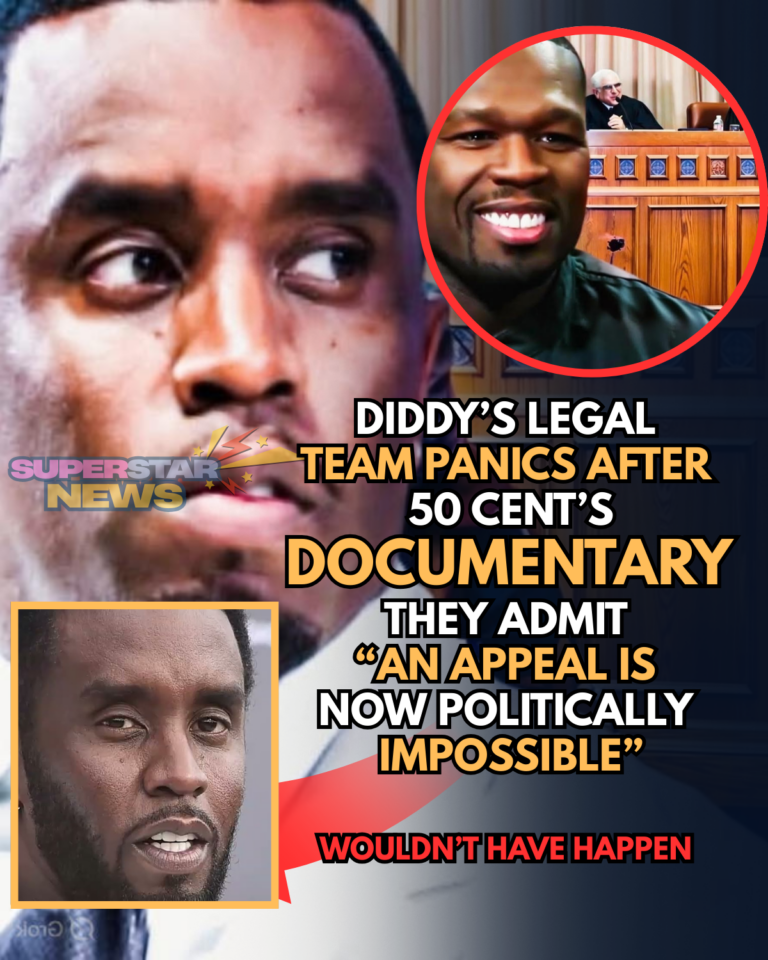
A bombshell allegation from a former senior music executive has laid bare a potential criminal enterprise at the heart of the industry, directly implicating Sean “Diddy” Combs. In undercover footage released by James O’Keefe, former Atlantic and Def Jam Vice President Marty Schulman alleges Combs operated a blackmail-based control system, using compromising footage from parties to enforce loyalty and destroy careers.
 Schulman’s claims provide a chilling blueprint of coercion, moving the narrative around Combs from individual misconduct to organized criminal enterprise. His position grants the allegations immense credibility; as a VP, he was in the rooms where careers were made and broken, observing the industry’s unspoken mechanics firsthand.
The alleged system functioned on fear and enforced silence. According to Schulman, parties hosted by Combs were not merely gatherings but traps. Attendees, often in compromising situations with drugs and women present, were allegedly recorded without their full knowledge.
That footage, Schulman claims, became leverage. The threat of exposure, not necessarily spoken aloud, was used to control business decisions, ensure loyalty, and punish non-compliance. This transforms the allegation from salacious gossip into a potential federal extortion case.
Legal experts note extortion under federal law does not require an explicit threat or monetary demand. If individuals altered their behavior—stayed silent, made unfavorable deals, or enforced loyalty—out of fear that Combs would release damaging material, the legal threshold for coercion may be met.
The enforcement mechanism, Schulman states, was blacklisting. Combs allegedly had the power, often in coordination with other executives and studio heads, to quietly end careers. This retaliatory action is critical for prosecutors, turning fear into a tangible consequence.
Blacklisting at this level is subtle but devastating. It manifests as meetings that never get scheduled, promised funding that vanishes, and phone calls that go unanswered. From the outside, it looks like misfortune; from the inside, it is understood as punishment.

This pattern of alleged retaliation answers a key legal question: what happened to those who didn’t comply? If multiple artists or executives experienced similar professional ruin after crossing Combs, it constitutes pattern evidence of a coercive system.
Schulman’s testimony now opens a direct path for prosecutors to consider Racketeer Influenced and Corrupt Organizations (RICO) charges. RICO is designed to dismantle ongoing criminal enterprises, not just prosecute individual bad acts.
To build a RICO case, prosecutors must demonstrate an enterprise, a pattern of racketeering activity over time, and coordination among participants. Schulman’s description of Combs working with other industry gatekeepers could satisfy the enterprise element.
The alleged predicate acts are blackmail and extortion. A pattern would be shown through multiple victims over years, while coordination could be inferred from the collective silence and enforcement of the system’s rules by various industry figures.
This shifts the legal focus entirely. The question is no longer whether Combs committed a single crime, but whether he led an organized system that used coercion to maintain power and profit. This structural approach is how prosecutors dismantle complex criminal networks.

A pressing question remains: if federal raids on Combs’s properties months ago secured servers allegedly containing such footage, why are there no new charges? Legal analysts explain evidence alone is insufficient without context.
Prosecutors likely need cooperating witnesses who can testify the footage was used as leverage. They must prove it created fear that altered behavior, moving beyond mere possession of embarrassing videos to demonstrating their operational use in a scheme.
The delay may indicate investigators are building an airtight case, waiting for key insiders to flip. Coercive systems collapse not when evidence is gathered, but when the fear enforcing silence evaporates. Public scandals and raids can shatter that fear.
Schulman coming forward signals that shift. When a high-level executive speaks, it suggests the perceived leverage is fading. This can create a cascade, encouraging other witnesses to cooperate in exchange for immunity or favorable treatment.
The allegations also reframe the mysterious career downfalls of several artists associated with Combs, such as Danity Kane and Day26. Their very public collapses could now be re-examined not as commercial failures but as potential examples of alleged retaliation.

Prosecutors would not need to prove every artist was filmed, only that a believable threat of exposure existed and that resistance led to professional ruin. This pattern of success, followed by resistance and then catastrophic collapse, is what investigators seek.
The existence of such a system, if proven, would reveal a dark undercurrent to decades of music industry history. It suggests control was maintained not just through talent and business acumen, but through the calculated cultivation of fear and mutually assured destruction.
All eyes are now on the Southern District of New York. Investigators will be meticulously comparing Schulman’s roadmap to the evidence seized in the raids, seeking the corroborating witnesses and digital footprints to connect the dots.
For the industry, this is a moment of profound reckoning. An allegation from a figure of Schulman’s stature challenges the very power structures that have long operated in the shadows. It describes a machine built on silence, now grinding loudly toward exposure.
The ultimate legal test will be whether prosecutors can transform this testimony of mechanics into a provable pattern of racketeering. If they can, the case against Sean Combs would expand into one of the most significant prosecutions in entertainment history.
This story is no longer about a single lawsuit or a celebrity scandal. It is a forensic examination of alleged systemic corruption, where art, business, and fear became fatally intertwined. The silence has been broken; the unraveling has begun.