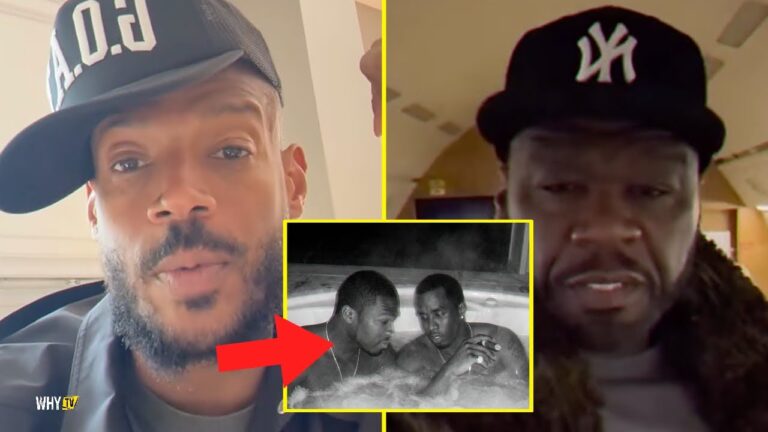
The simmering feud between hip-hop mogul 50 Cent and entertainment mogul Sean “Diddy” Combs has drawn a new figure into its orbit, sparking a fiery public exchange. Actor and comedian Marlon Wayans finds himself in the crosshairs after 50 Cent issued a blunt directive on social media, demanding Wayans cease mentioning his name.
 The controversy ignited following Wayans’ recent commentary on the numerous allegations and documentaries surrounding Diddy. In an interview, Wayans offered a nuanced perspective, focusing not on the specific accusations but on the broader motivations behind the public reckoning. He questioned whether the pursuit was driven purely by accountability or by personal vendettas.
Wayans specifically referenced the long-standing and well-documented animosity between 50 Cent and Diddy, suggesting it could be coloring the narrative. His comments were framed as a caution about karma and the energy directed at others, without explicitly defending or condemning Diddy’s alleged actions. This philosophical take, however, did not sit well with 50 Cent.
The “In Da Club” rapper and executive producer responded swiftly and decisively on his dominant Instagram platform. He directly addressed Wayans in a since-deleted post, making his position unequivocally clear. His message was a terse command for the comedian to remove his name from any future discussions, particularly those related to Diddy.
This public rebuke underscores 50 Cent’s zero-tolerance policy regarding commentary on his relentless social media campaign against Diddy. For months, 50 Cent has used his platform to amplify and mock the serious legal and civil allegations facing Diddy, treating the situation with his characteristic sardonic humor. He perceives any outside analysis as interference.

Industry observers note this clash highlights the intense polarization surrounding the Diddy saga. While many have voiced support for the accusers, others have urged caution, waiting for legal proceedings to unfold. Wayans’ comments placed him in the latter camp, inadvertently stepping into a pre-existing battlefield between two of music’s most formidable personalities.
The incident also raises questions about the boundaries of public discourse among high-profile figures. Wayans, known for his comedic roles and thoughtful interviews, ventured into commentary on a deeply personal and litigious feud. 50 Cent’s response reinforces that he views this territory as his own, off-limits to others not directly involved in the conflict.
Reaction on social media has been divided, with some users supporting 50 Cent’s direct approach and others criticizing him for dismissing a perspective that called for introspection. Meanwhile, representatives for Marlon Wayans have not issued a public response to 50 Cent’s demand, leaving his next move uncertain.

This development ensures the spotlight remains firmly fixed on the peripheral drama surrounding the Diddy allegations. 50 Cent has successfully redirected a portion of the narrative back onto himself and his methods, demonstrating his mastery of controlling the media cycle through confrontation and viral moments.
As legal teams prepare for a protracted battle in court, the court of public opinion continues to operate at a frenetic pace. The exchange between 50 Cent and Marlon Wayans serves as the latest flashpoint, proving that in the digital age, even philosophical commentary can trigger a swift and definitive backlash from those who feel implicated.
The ongoing saga shows no signs of abating, with each public statement adding new layers of complexity. The entertainment world now watches to see if Wayans will heed the warning or if this momentary clash will escalate into a more sustained dispute, further entangling the careers and reputations of those involved.

Analysts suggest that 50 Cent’s aggressive posture is part of a broader strategy to maintain relevance and narrative control. By silencing critics or commentators, he ensures his voice remains the loudest on the subject, a tactic that has defined his public persona for decades and continues to generate headlines and engagement.
Ultimately, this incident transcends a simple celebrity spat; it reflects the heightened tensions in an industry grappling with serious issues of power and accountability. The way these discussions unfold in the public sphere, often through social media call-outs and viral videos, is becoming a story in itself, with real-world implications for all parties involved.
The confrontation leaves the public with lingering questions about the nature of modern fame and conflict resolution. In an era where statements are global within seconds, the line between personal grievance and public discourse is increasingly blurred, setting the stage for more such incidents in the future.
For now, the message from 50 Cent’s camp is unambiguous: his feud with Diddy is not open for public analysis or commentary. Whether this stance will deter others from weighing in remains to be seen, but it has certainly added another volatile chapter to an already explosive story.