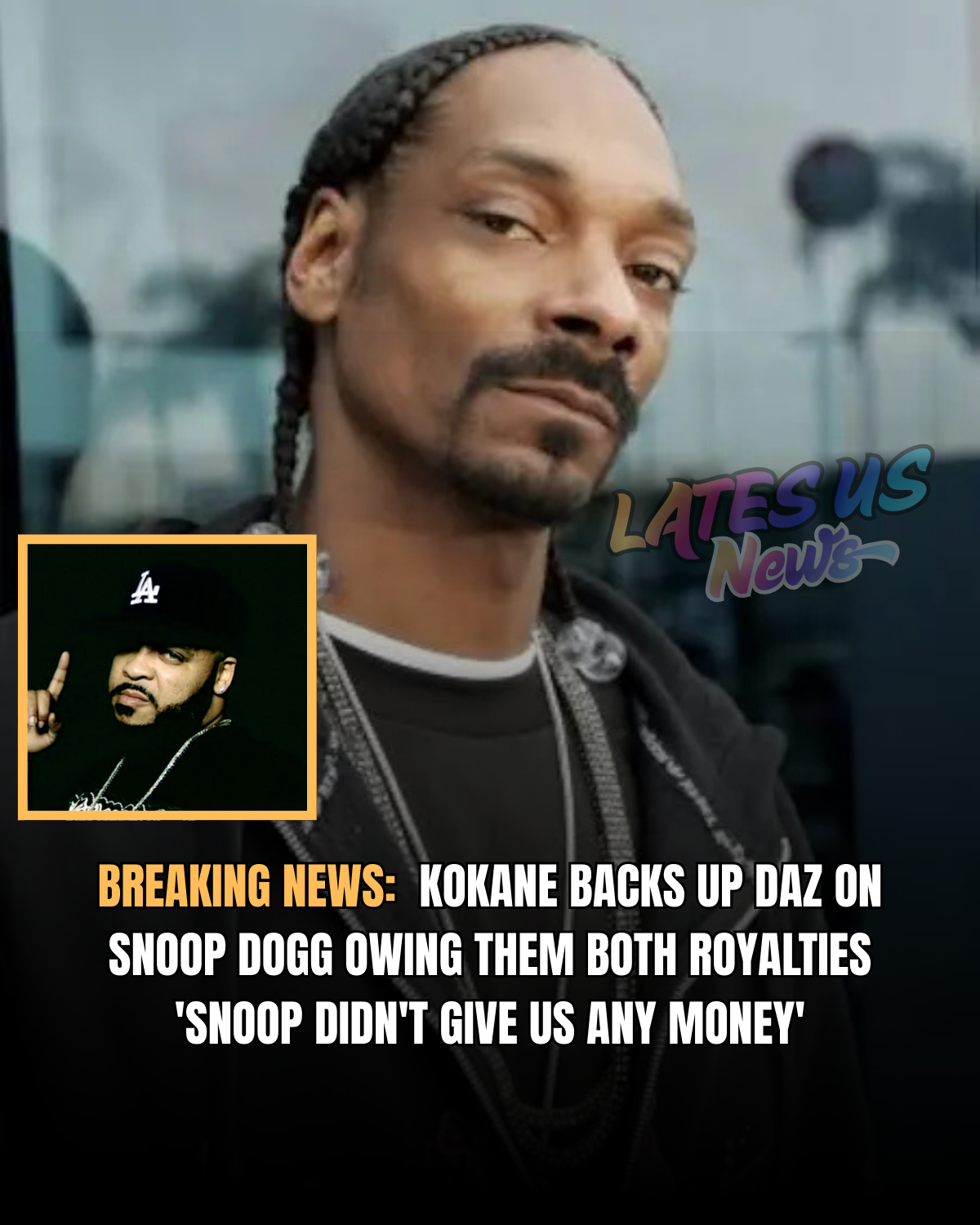
A major new allegation has erupted in the long-running saga of Death Row Records finances, as veteran rapper Kokane has publicly corroborated claims that Snoop Dogg failed to pay royalties for decades of collaborative work. In a fiery video statement, the legendary West Coast artist confirmed he and Daz Dillinger never received compensation from the hip-hop icon, despite being architects of the era’s defining sound. This direct testimony from a respected peer intensifies scrutiny on Snoop’s business dealings and ignites a fresh firestorm across social media platforms.
 Kokane, a pivotal figure in the G-funk movement, stated unequivocally that royalty checks from Snoop Dogg were nonexistent. “Snoop and I have done the most songs with each other,” Kokane asserted. “But I don’t know what a royalty looks like.” His declaration directly backs Daz Dillinger’s recent claims, presenting a united front from two key collaborators from Snoop’s “Doggy Style” and “Tha Doggfather” heyday. This partnership was central to the output of both Death Row and its successor, Dogg House Records.
The artist emphasized that their compensation was purely intangible. He noted that while many have profited immensely from the musical landscape they helped forge, he and Daz walked away with only “legacy and respect.” This sentiment underscores a painful reality for numerous session musicians and vocalists from hip-hop’s golden age, where verbal agreements and handshake deals often superseded formal contracts, leaving contributors without ongoing financial participation.
Kokane’s tone shifted from matter-of-fact to defiant as he addressed the core issue. “I’ve been royalty,” he proclaimed. “See, you can take them royalties and shove it up your ass if that’s how you get down. You know what I’m saying? So, enough of the bull crap.” This raw frustration reflects a deep-seated resentment that has simmered for years, now boiling over into public view and challenging the carefully curated image of unity within the West Coast hip-hop community.
He was careful to frame his comments not as a personal attack but as a necessary truth-telling mission. “This is not about me bashing one individual and bandwagoning,” Kokane explained. “It’s just simply expressing myself and telling the whole world.” He positioned himself as “playing the devil’s advocate” and relating to Daz as the “underdog,” while also praising Daz’s diligence and independent hustle in the years since their peak collaboration.
The rapper revealed that a final, unspecified incident served as the “last straw,” leading him to completely sever his professional following of Snoop Dogg. “I discontinued myself, you know, from following him. I don’t have to follow you. You don’t shut the lights on and off of me,” he stated, asserting his independence and self-sufficiency outside of the Snoop Dogg ecosystem. This symbolic break highlights the personal rift beneath the financial dispute.

Financially, Kokane claims to have moved on and recovered. “I got all my my bread back,” he said, suggesting he found prosperity through other means. He directed a pointed message about the unpaid royalties: “You can take them royalties that that you took… or that your people took and you can live with it.” This implies a belief that the responsibility, whether direct or through intermediaries, ultimately rests with Snoop.
His closing remarks extended an olive branch of sorts to Daz Dillinger, making his alliance clear. “But being the devil, playing the devil’s advocate, I ain’t mad at Daz at all.” This solidarity is significant, as it prevents Snoop from potentially dismissing the issue as a grievance from a single former associate. It now represents a coordinated accusation from multiple credible sources within the inner circle.
The fallout on social media has been immediate and intense. Hip-hop forums and platforms like Twitter and Instagram are alight with debate, with fans dissecting the history of Death Row, Snoop’s business acumen, and the ethical obligations of artists to their collaborators. Many are revisiting classic albums to catalog Kokane’s and Daz’s extensive but often uncredited contributions, from ad-libs to full choruses.
This controversy arrives at a sensitive time for Snoop Dogg, who has recently positioned himself as a custodian of hip-hop history through his acquisition of the Death Row Records brand. These allegations threaten to tarnish that narrative, painting a picture of financial oversight—or deliberate exclusion—that contradicts the image of a benevolent industry leader giving the label a proper home.

Industry analysts note that royalty disputes from the 1990s are notoriously complex, often mired in poor record-keeping, defunct corporate entities, and ambiguous ownership of master recordings. However, Kokane’s specific claim regarding songs recorded directly with Snoop Dogg potentially simplifies the chain of accountability, putting the focus squarely on the individual artist’s payment to his featured guests.
Legal experts suggest that while statutes of limitations may bar formal litigation over decades-old recordings, the court of public opinion is now fully in session. The reputational damage to Snoop Dogg could be substantial, affecting his brand partnerships and his legacy as a figure who often speaks about loyalty and looking after his own.
For Daz Dillinger, Kokane’s backing provides immense validation. Having voiced his complaints for years, often to audiences that viewed it as lingering bitterness, the support from a fellow veteran lends significant weight and credibility to his long-standing claims. It transforms a solo campaign into a movement with multiple witnesses.
The broader implication for the music industry is a renewed examination of how collaborative works are monetized. This case exemplifies the perennial struggle between front-facing stars and the supporting artists whose vocal textures and musical ideas are essential to a hit record’s identity, yet who are frequently left out of long-term financial rewards.
As of this reporting, representatives for Snoop Dogg have not issued a public response to Kokane’s specific allegations. The silence from Snoop’s camp is deafening amidst the growing online clamor for an explanation. How he addresses—or ignores—these direct claims will be closely watched by the industry and fans alike.
Kokane’s decision to speak out now may inspire other uncredited or underpaid artists from the same era to come forward. The West Coast sound was built on a community of talents, and this rupture could lead to further revelations about the financial underpinnings of one of music’s most profitable and influential periods.
Ultimately, this is more than a dispute about money; it is about legacy, recognition, and the historical record. Kokane and Daz are fighting for their names to be properly inscribed in the story from which they feel financially erased. Their “legacy and respect,” as Kokane put it, is now being leveraged in a public battle for accountability.
The coming days will determine whether this remains a heated online debate or escalates into a formal challenge. With Kokane’s powerful testimony now public record, the pressure on Snoop Dogg to address the past has reached a fever pitch, proving that even three decades later, the business of Death Row is still very much alive and contentious.