The Duchess of Sussex has ignited a fresh debate over privacy and publicity by releasing new images of her children that deliberately conceal their identities. The photographs, shared on her recently revived Instagram account, show Prince Archie, 5, and Princess Lilibet, 3, only from behind or with their faces obscured, a move commentators are calling a calculated reflection of the Sussexes’ demand for control over their narrative.
 This latest post is believed to have been taken on the set of Meghan’s now-cancelled Netflix series, Pearl. It arrives as Prince Harry is in the United Kingdom alone for a brief visit, a trip already shrouded in speculation over a potential meeting with his father, King Charles III, who is undergoing cancer treatment. The juxtaposition of a carefully managed family image from California and a looming royal rift in London underscores the enduring tensions within the family.
Public reaction has split sharply. Critics deride the censored photos as a pointless exercise, arguing they generate publicity while offering nothing of substance. “I think it’s pointless having them on the screen with little heart little gray hearts cut out to cover their faces,” said one commentator on a leading morning show. The act is seen by some as a continuation of leveraging royal status for commercial gain, despite the couple’s stated desire for a private life.
Defenders, however, assert it is a parent’s unequivocal right to control their children’s exposure. “This to me is entirely a reflection of that,” a royal analyst stated. “She’s taken this dance where she doesn’t show their faces… and that’s what she’s decided to do. And I think you know that is everyone’s prerogative as a parent and it was always about control.” This camp views the move as a legitimate boundary, comparing it to practices of other minor royals like Princesses Beatrice and Eugenie.
 The strategy highlights Meghan’s evolving and sometimes inconsistent use of her social media platform, which has featured professional promotional material, casual personal moments, and now, guarded family glimpses. Analysts note this reflects a broader challenge for the Sussexes as they navigate building a commercial brand independent of the monarchy while fiercely protecting their family’s privacy—a balancing act that often appears contradictory to the public.
Meanwhile, the focus intensifies on Prince Harry’s UK itinerary. His only confirmed public engagement is presenting an award at the Invictus Games Foundation’s tenth-anniversary ceremony in London on Wednesday. All eyes are on whether he will see his father during his stay, a meeting that would mark their first in-person contact since the King’s cancer diagnosis was revealed.
The potential for a reconciliation remains mired in complexity. “You cannot have a reconciliation with just Harry alone,” argued one commentator, pointing to the deep grievances Meghan has expressed and the allegations made in Harry’s memoir, Spare. “He’s got a family in America and that family… has made it clear of her points that she has against the royal family and Britain.”
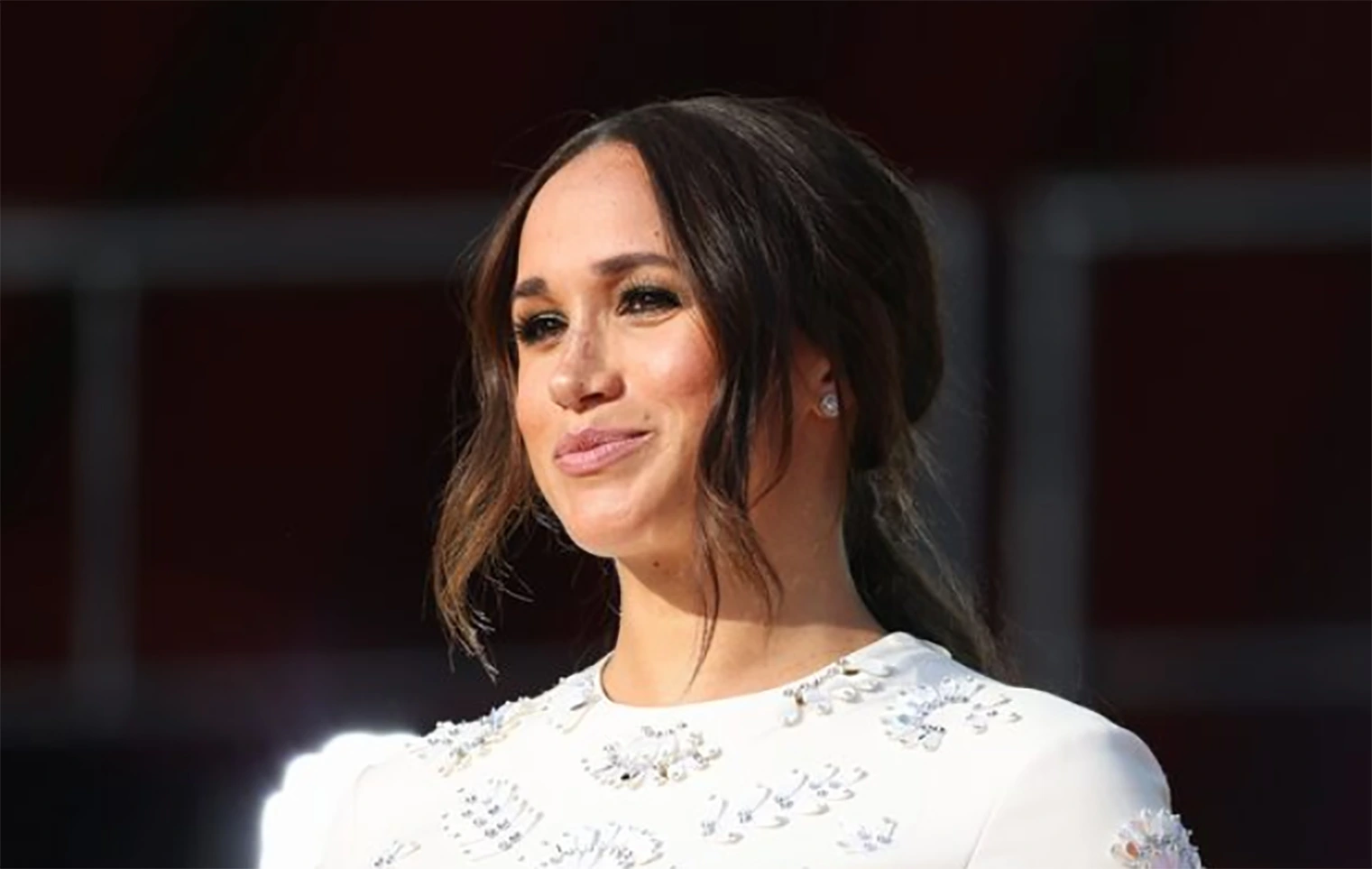
Others hold a sliver of hope that the King’s health could provide an opening for a first step. “I kind of feel that they can meet without having to have everything out,” suggested an observer. The fundamental obstacles, however, appear daunting, from unresolved issues like Harry’s security funding to the perceived need for apologies on both sides. “You’ve still got to get down to the nitty-gritty of everything that’s been said, the allegations,” another voice countered.
A poignant subplot is the possibility of Harry visiting St. George’s Chapel at Windsor Castle privately to mark the anniversary of his grandmother, Queen Elizabeth II’s, death. Such a visit would be a deeply personal act of remembrance, separate from the fraught family politics, yet symbolically powerful given the location of her burial.
 The censored photos of Archie and Lilibet, therefore, serve as more than a simple social media post. They are a stark visual manifesto of the Sussexes’ chosen path: autonomous, controlled, and at a deliberate distance from the traditional royal fold. This distance is physically mirrored by Harry’s solitary presence in the UK, with his young family remaining an ocean away, their faces still unknown to the world.
As the Duke attends his charitable events, the question of a royal audience hangs heavily. A meeting, however brief, would be parsed for every nuance of body language and statement. A failure to meet would be interpreted as a confirmation that the chasm is now unbridgeable. The King, undergoing treatment, faces the profoundly personal dilemma of reconciling his role as Head of State with his desire, as expressed previously, to have his son and grandchildren back in the fold.
The dual narratives—of controlled imagery in America and uncertain diplomacy in Britain—are inextricably linked. Both speak to the Sussexes’ redefinition of their relationship with the monarchy: one of commercial partnership and narrative ownership, yet still inextricably tied to the institution they stepped back from. The blurred faces of Archie and Lilibet are a perfect metaphor for this opaque and evolving relationship—present, yet deliberately out of focus; central to the story, yet shielded from its glare.
Ultimately, the public and the palace are left to interpret shadows and silhouettes. The children’s concealed identities represent the ultimate boundary the Sussexes have drawn. Whether this is seen as a prudent protection of childhood or a cynical media tactic depends entirely on the viewer’s perspective, a division that has come to define the Sussex era. The only certainty is that as long as the couple continues to operate in the public sphere, this tension between revelation and concealment, between access and control, will remain at the heart of their story.