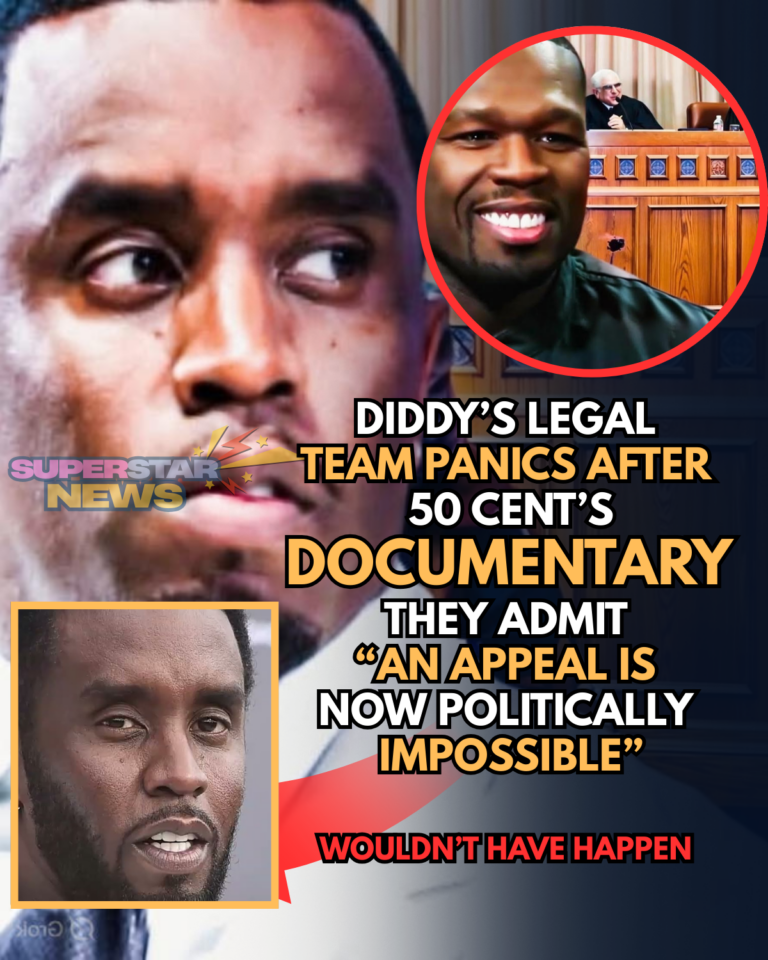
A seismic shift is occurring within the hip-hop community, revealing a stark and unsettling alliance forming not against alleged predation, but against the man exposing it. The unified front emerging to condemn 50 Cent for his documentary on Sean “Diddy” Combs has sparked accusations of a coordinated damage control campaign, raising profound questions about loyalty, fear, and complicity.
 The core paradox fueling public outrage is glaring: why is the industry’s collective fury directed at 50 Cent rather than at the serious allegations against Diddy? This reaction mirrors silencing a fire alarm while the blaze rages. This targeted anger suggests a priority of containment over justice, a desperate bid to control a narrative spiraling beyond traditional gatekeepers’ influence.
The coalition is bizarrely comprehensive. Rappers like Ja Rule, who previously suffered public humiliation by 50, have re-entered the fray. Hip-hop journalists and self-styled historians, long silent on whispers of misconduct, are now vocally attacking the documentary’s format. Their sudden alignment, after years of quiet, reads as self-preservation for those who may have enabled a toxic system through their silence or presence.
Most strikingly, cultural commentator Dr. Umar Johnson has framed the exposure as anti-Black, labeling accountability for Black men as betrayal. This rhetoric, critics argue, weaponizes racial solidarity to shield alleged predators, prioritizing a patriarchal image over the safety of Black women and victims. It condemns justice only when the accused is white, a stance seen as protecting harm within the community.

A pervasive theory, circulating as whispers, suggests Diddy has been actively making calls. The potential existence of 140 hours of footage, as referenced by 50 Cent, looms large. The fear isn’t necessarily of being caught committing crimes, but of being documented in compromising environments, laughing alongside or normalizing the very behavior now under scrutiny. The coordinated push to stop the release feels like preemptive damage control.
The ego of dethroned gatekeepers is a significant factor. 50 Cent bypassed the usual male authorities, entrusting the documentary to Black female filmmakers and the platform of Netflix. This direct affront has translated into criticisms of “irresponsibility,” often code for an unauthorized narrative. Their outrage stems from a loss of control, not from the allegations themselves.

The strategy to mobilize Black women against 50 Cent appears to have backfired. The attempt to frame him as exploiting trauma for profit was met with skepticism from a group long ignored by these same voices. The sudden, performative concern for women’s welfare rings hollow when contrasted with a history of dismissing survivors and debating trivialities over substance.
In contrast to the frantic coordination against him, 50 Cent exhibits a calm, strategic demeanor. His history of leveraging receipts and engaging in mutually assured destruction suggests he is prepared for this backlash. His smiling warnings project not bluff, but the confidence of a countdown, further unnerving an opposition that seems driven by palpable fear.

This moment transcends a typical celebrity feud. It is a stress test for the culture’s moral compass. The loudest voices condemning exposure may, in fact, be those with the most to lose—not in reputation alone, but in their proximity to a truth threatening to emerge. The question now haunting the industry is simple: who is afraid of the tape, and what does their unified panic truly protect?
The unfolding scandal lays bare a painful hypocrisy. A community that often demands accountability from external forces is now wrestling with an internal reckoning. The alignment of powerful men suggests a protection racket for legacy and image, revealing that the greatest threat to some is not the crime, but the witness. The coming days will determine if this coordinated front can withstand the weight of its own contradictions.