Comedian and actor Marlon Wayans has launched a scathing public critique of 50 Cent, condemning his role in producing Netflix’s explosive new documentary series targeting Sean “Diddy” Combs. The incendiary comments, made during a recent interview, frame the documentary as a personal vendetta rather than journalism, injecting fresh controversy into the already volatile media storm surrounding the hip-hop mogul. Wayans’ intervention signals a significant fracture within the entertainment community regarding the ethics of the project.

Speaking on the platform Forgotten Kings TV, Wayans dissected the documentary’s narrative construction with pointed skepticism. He emphasized the power of editing and selective storytelling to create damaging impressions, regardless of veracity. “You can skew people very close to the situation,” Wayans stated. “You can create any narrative as a producer and as a director and as a storyteller.” His commentary directly challenges the documentary’s presentation of facts, suggesting the series is a crafted “narrative” built from existing gossip and long-standing rumors.
Central to Wayans’ critique is the deeply personal, decades-long feud between 50 Cent, born Curtis Jackson, and Diddy. He characterized the documentary as an extension of that private conflict, questioning the timing and motivation behind its release. “50 and Puff have a long-term beef. It’s personal,” Wayans said, framing the project as an opportunistic strike. He expressed a moral objection to the spectacle, adding, “the way Puff is down on his luck and 50 is kicking a man when he’s down.”
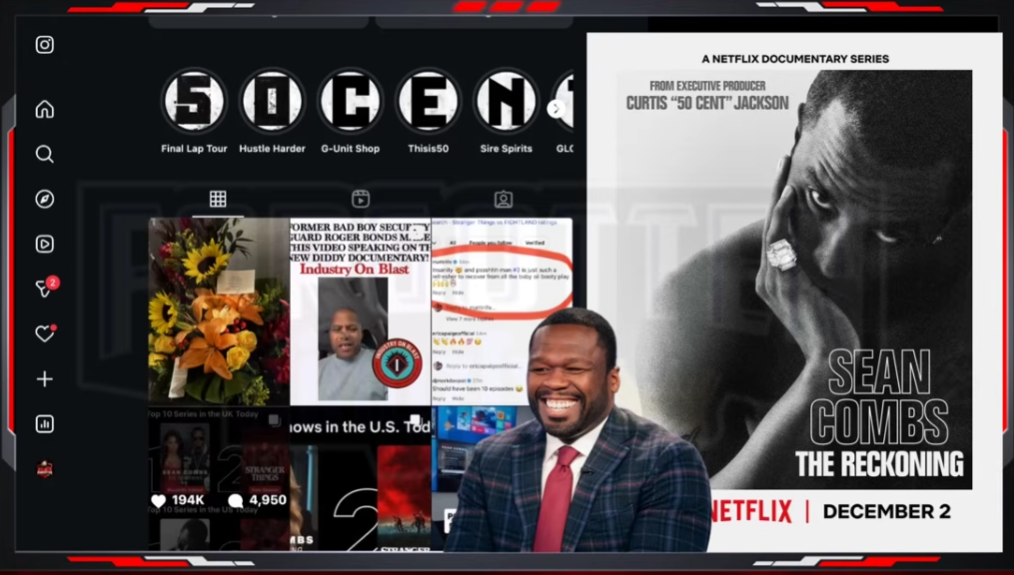
The documentary series, titled The Reckoning, is a four-part examination of numerous allegations against Diddy, ranging from personal misconduct to far more serious, unproven historical insinuations. It has ignited fierce debate since its release, drawing immediate legal action from Diddy’s camp. His attorneys issued a cease-and-desist letter, branding the series a “hit piece” and alleging it was Netflix’s “vindictive response” after Diddy declined to participate in a 2023 project where the streamer demanded full creative control.
Netflix has forcefully denied these claims. In an official statement, the company asserted the project “has no ties to any past conversations” with Diddy, that footage was “legally obtained,” and that while Curtis Jackson is an executive producer, he “does not have creative control.” The statement concluded the series is “not a hit piece or an act of retribution.” This stark contradiction sets up a high-stakes battle over narrative control and corporate motive.
Wayans’ commentary amplifies concerns raised by others in the industry, including Dame Dash, who recently accused 50 Cent of “doing the white man’s job” by participating in what they perceive as a systemic targeting of Black celebrities. This perspective views the documentary not as accountability but as a harmful spectacle within a “wicked system” prone to “witch hunts.” The ethical line between investigative reporting and exploitative character assassination forms the core of this burgeoning backlash.
The documentary’s scope has particularly alarmed observers for venturing beyond recent civil lawsuits into the legendary, unsolved murders of Tupac Shakur and The Notorious B.I.G. It features interviews and allegations suggesting Diddy’s involvement, claims that have circulated in fringe theories for years but have never been substantiated in court. Wayans highlighted this escalation as particularly reckless, given the profound cultural wounds surrounding these cases.
In the days following the series’ debut, 50 Cent has relentlessly mocked Diddy on social media, sharing a post claiming Diddy sent him flowers with a caption filled with derogatory and homophobic language. This behavior has reinforced critics’ arguments that his involvement is rooted in schadenfreude rather than a pursuit of justice. The trolling has further polarized public opinion, with some audiences finding it entertaining and others viewing it as cruel and counterproductive.

The legal and reputational stakes for all parties are immense. Diddy faces multiple civil lawsuits and a federal criminal investigation, with his homes raided by Homeland Security earlier this year. The documentary adds a potent layer of public judgment to these ongoing legal processes. For Netflix, the project tests the boundaries of its documentary ethics and its vulnerability to lawsuits. For 50 Cent, it represents the culmination of a long-standing rivalry, though it risks damaging his own reputation through perceptions of malice.
As the controversy rages, the court of public opinion remains divided. Viewership numbers suggest significant audience engagement, yet prominent voices like Marlon Wayans are urging caution, reminding the public of the complex human and historical contexts at play. His warning about “karma” serves as a stark philosophical counterpoint to the documentary’s accusatory tone. The debate now extends far beyond the allegations themselves to encompass media responsibility, personal vendettas, and the very nature of truth in the digital age.
The fallout from The Reckoning continues to unfold in real time, ensuring that the stories of Diddy, 50 Cent, and the legacy of hip-hop’s most turbulent era will remain under a harsh, contested spotlight. With legal threats active and cultural tensions high, this saga has evolved from a documentary release into a defining moment for the industry, probing the limits of storytelling, rivalry, and redemption.