A simmering generational feud within the hip-hop world has escalated dramatically after a public threat from Christian “King” Combs, son of music mogul D. “Diddy” Combs, directed at industry titan 50 Cent. The incendiary online comment, where the younger Combs vowed to physically confront the “In Da Club” rapper, has drawn a characteristically sharp and calculated response from the G-Unit founder, highlighting a stark divide between self-made success and inherited legacy.
 The controversy ignited on social media when King Combs, 26, made a bold declaration regarding 50 Cent, whose real name is Curtis Jackson. In a since-circulated clip, Combs issued a direct challenge, stating he would slap the famed rapper and producer if they ever met in person. The threat immediately sent shockwaves through the entertainment community, setting the stage for a highly anticipated rebuttal from one of music’s most formidable personalities.
True to form, 50 Cent did not keep the public waiting. Responding with a tone of dismissive authority rather than overt aggression, Jackson posted a message squarely aimed at the young artist. He framed the exchange not as a street rivalry but as a lesson in stature and accomplishment, leveraging his decades-long career as a shield against the provocation. His calm yet pointed retort shifted the focus from physicality to legacy and business acumen.
In his detailed response, 50 Cent meticulously cataloged his journey from chart-topping musician to a powerhouse in television and spirits. He highlighted his groundbreaking work on the “Power” franchise and his lucrative partnership with E. & J. Gallo Winery for his Sire Spirits brand. This narrative served as a stark contrast to the profile of King Combs, who is often associated with his father’s iconic Bad Boy Records empire.
The core of 50 Cent’s message was a masterclass in contextualizing success. He emphasized building an empire “from the ground up,” a clear delineation from those who operate within the shadow of a pre-existing dynasty. By reminding audiences of his own origins and self-made status, he implicitly questioned the foundation of King Combs’ own career, suggesting it remains intrinsically linked to the Combs family name.

This public spat transcends a simple war of words; it touches on enduring themes of respect, legacy, and the path to legitimacy in the entertainment industry. 50 Cent’s strategy reframed the conflict, moving it from the realm of potential physical altercation to a debate about meritocracy versus nepotism, a topic that resonates deeply with fans and observers of hip-hop culture.
Fan reaction online has been swift and polarized. Many have rallied behind 50 Cent, praising his disciplined response and viewing his career as an unimpeachable defense. Others see the exchange as an unnecessary confrontation initiated by a younger artist seeking to carve out his own identity separate from his father’s overwhelming shadow. The digital discourse continues to dissect every layer of the interaction.
Industry analysts note that 50 Cent has long utilized social media as a strategic tool for engagement and brand management. His handling of this incident follows a familiar pattern: transforming a potential conflict into a platform for self-promotion and reinforcing his narrative of resilience and business savvy. It is a calculated move that turns controversy into content.

For King Combs, the incident represents a high-profile test. As an artist working to establish himself beyond the legacy of Diddy, such public clashes with established figures are a double-edged sword, generating headlines but also inviting intense scrutiny. The pressure to step out from a parent’s monumental shadow is a recurring challenge for many second-generation celebrities.
The aftermath of this exchange remains to be seen. While the threat of physical violence sparked the incident, 50 Cent’s response has effectively elevated the conversation, making a direct confrontation seem unlikely and, from a public relations standpoint, beneath his current station. The focus has been successfully shifted to a discussion of legacy and accomplishment.
This event underscores the evolving nature of hip-hop rivalries, where social media platforms amplify tensions instantly. Disputes that might once have played out in record studios or through diss tracks now unfold in real-time for a global audience, with each participant crafting their narrative directly for public consumption.
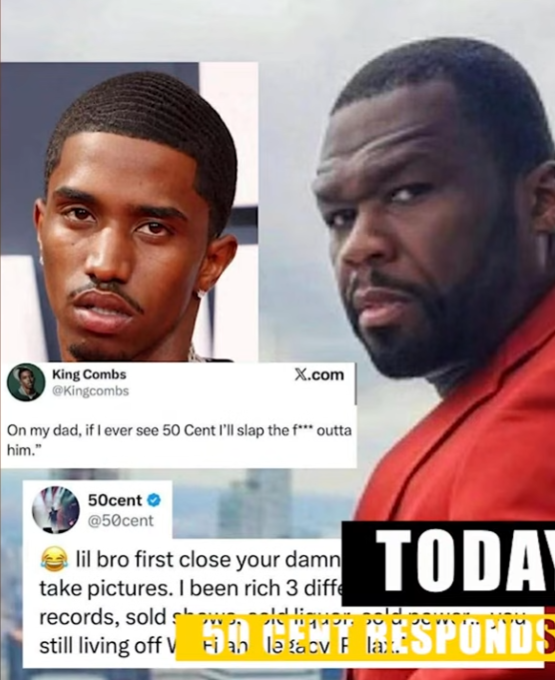
As the story develops, observers will watch to see if King Combs issues a further response or if the situation de-escalates following 50 Cent’s commanding retort. The elder statesman’s advice to “close your mouth kid” and stay focused may well be the final word, serving as a public lesson in picking one’s battles.
The broader implication for the culture is a renewed examination of how respect is earned and maintained. 50 Cent’s emphasis on tangible, built success over bravado reflects a maturation within the genre, where business portfolios and intellectual property can speak louder than any boast or threat in the digital age.
Ultimately, this clash serves as a potent reminder of 50 Cent’s enduring influence and his adeptness at controlling a narrative. By responding with a resume instead of rage, he has reaffirmed his position not just as a rapper, but as an institution, challenging any newcomer to measure their accomplishments against a lifetime of groundbreaking work before issuing challenges.