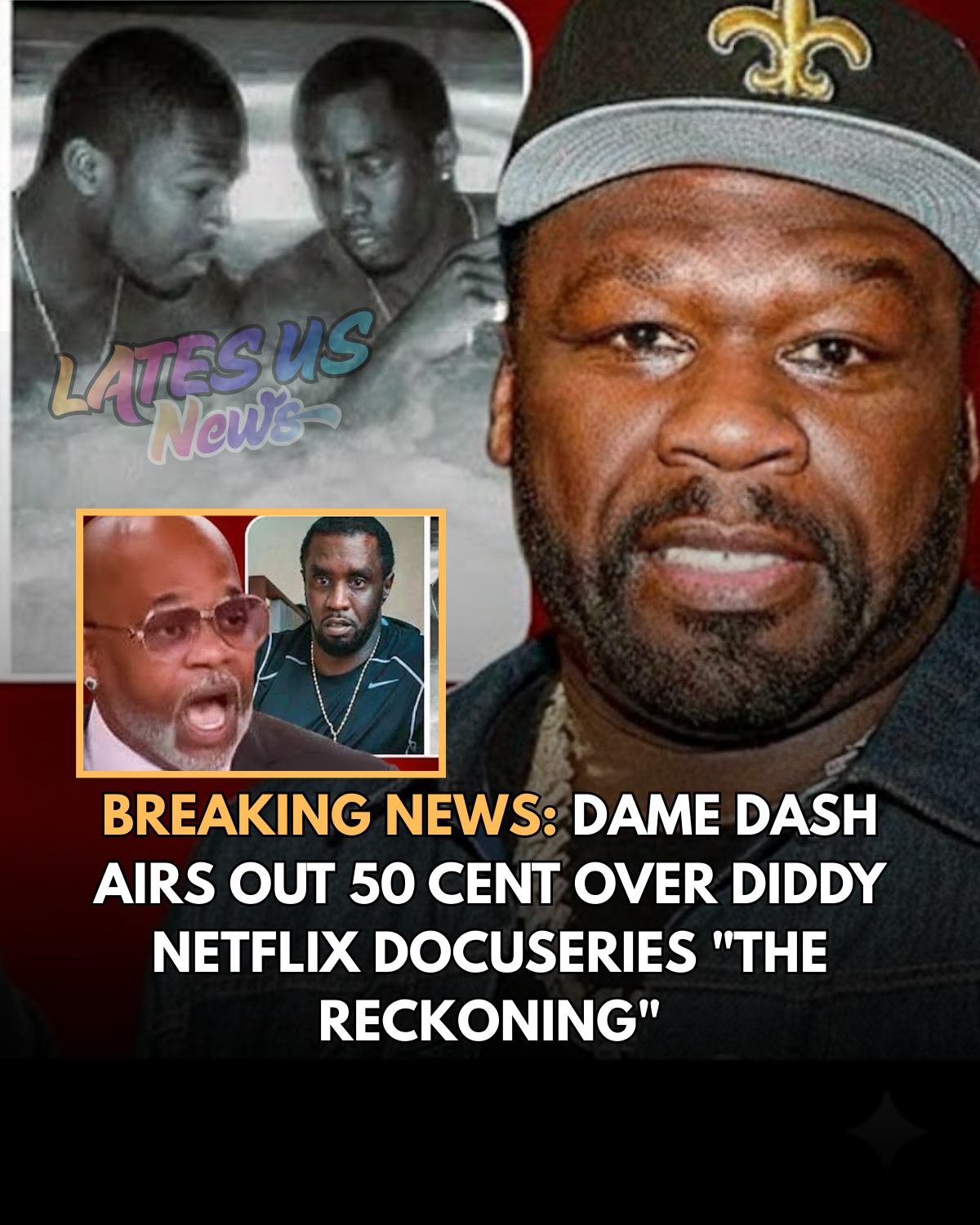
Dame Dash has launched a blistering critique of 50 Cent, questioning the rapper’s motives and moral code for producing the explosive Netflix docuseries “The Reckoning” about Sean “Diddy” Combs. In a newly surfaced interview, the Roc-A-Fella co-founder condemned the project as a betrayal of street ethics and Black solidarity.

The interview, conducted on the Afro TV POV show and discussed on the “MRE and RIP Show,” features Dash addressing longstanding rumors and photographs from the 1990s. He specifically tackled narratives about his past relationships, including with the late Aaliyah, and his connections to Diddy, attempting to separate personal history from the current media frenzy.
Dash’s core argument centers on a perceived violation of an unwritten code. “I never in my life would have thought that 50 Cent would make a documentary about another man from our culture,” Dash stated, framing the series as an act of tearing down a Black man for a predominantly white-owned platform. He suggested personal vendetta, alluding to past tensions between 50 Cent and Diddy.
The business mogul articulated a street-derived philosophy of handling disputes internally. “If I’m a criminal and I see somebody doing a crime, I’m not telling,” Dash said, drawing a clear line at involving law enforcement or media. He emphasized that if he had a personal grievance, he would handle it “man to man,” not through a documentary.
Dash expressed deep skepticism about the docuseries’ content, labeling much of it “hearsay.” He warned of a dangerous climate for successful Black men, calling it “hunt a black man with money season.” He positioned himself as intentionally removed from such targeting, quipping, “if you sue me, you ain’t getting a thing cuz I ain’t got it.”
The hosts of “MRE and RIP,” Ed Lover and Reck, analyzed Dash’s comments, agreeing with his stance on internal conflict resolution and the perils of public narratives. They questioned the credibility of some sources in the Netflix series and the blending of multiple allegations, from financial disputes to personal misconduct.
Reck argued the documentary conflates different grievances, allowing people with unrelated personal trauma to use Diddy as a “scapegoat.” He stressed the importance of evidence over testimony, warning viewers about being conditioned by media narratives. “We’re trying to use our brain to get y’all to understand that anyone can condition y’all to believe a certain narrative,” Reck stated.
The conversation also turned to new developments behind the footage used in “The Reckoning.” The hosts cited a statement from Diddy’s longtime videographer, who claimed the material was stolen by a third-party fill-in crew member, not released due to any payment dispute. This allegation raises serious questions about the ethics of the documentary’s sourcing.

With reports swirling that Diddy is preparing a billion-dollar lawsuit against Netflix, the legal and cultural fallout from the series is only beginning. Dash’s intervention adds a significant voice from within hip-hop’s old guard, challenging the morality of the project’s very existence and igniting a fierce debate about loyalty, accountability, and who gets to control the narrative.
The hosts concluded by noting the series’ massive popularity but reiterated their caution. They urged discernment, highlighting that many allegations have circulated for years and that the pursuit of justice must be balanced against the potential for character assassination in the court of public opinion. This story continues to evolve as more figures from the industry weigh in on the cultural reckoning unfolding on screen.